 Ohne Anstehen buchbar
 So besuchen Sie die Cappella Palatina in Palermo
Ein praktischer, tageweiser Leitfaden für den Besuch der goldenen königlichen Kapelle in Palermo – Öffnungszeiten, die ruhigsten Zeiten, empfohlene Aufenthaltsdauer und Anreise.
Die Cappella Palatina belohnt ein wenig Planung: Ihre Öffnungszeiten wechseln je nach Tag, die Menschenmengen kommen und gehen, und der Palast um sie herum birgt weit mehr als einen goldenen Raum. Hier erfahren Sie, wie Sie Ihren Besuch zeitlich und inhaltlich gestalten.
Öffnungszeiten nach Wochentag
Die Cappella Palatina hat je nach Tag unterschiedliche Öffnungszeiten, daher lohnt es sich, den Kalender zu prüfen, bevor man aufbricht. Von Montag bis Samstag öffnet der Palastkomplex gegen 08:30 Uhr, letzter Einlass ist am späten Nachmittag gegen 16:30 Uhr — ein langes Zeitfenster, das Ihnen die Wahl Ihres Moments lässt. Sonntags und an religiösen Feiertagen gilt ein kürzerer Zeitplan: Die Türen öffnen zwar noch am Morgen, doch der letzte Einlass ist gegen Mittag, sodass ein entspannter Sonntagnachmittag hier nicht funktioniert. Das wichtigste Detail für Sonntagsbesucher ist die Schließung während der Messe. Die Kapelle ist ein geweihter Raum und bleibt ein aktiver Ort der Andacht, daher ist sie zwischen 09:30 und 11:30 Uhr für Besucher geschlossen, während ein Gottesdienst stattfindet. Wenn Sie an einem Sonntag in diesem Zeitfenster ankommen, werden Sie gebeten zu warten, und mit dem früheren letzten Einlass können Sie den Großteil Ihrer Besuchszeit verlieren. Versuchen Sie, vor 09:30 Uhr drinnen zu sein, oder planen Sie den Einlass nach 11:30 Uhr und behalten Sie dabei im Blick, wie wenig vom Tag bleibt. Da der Einlass in Ein-Stunden-Zeitfenstern erfolgt, ist das Zeitfenster, das Sie buchen, die eine Sache, die es wert ist, bewusst gewählt zu werden — wählen Sie ein Zeitfenster, das die Schließung während der Messe und die Menschenmengen am Vormittag umgeht, und der Rest des Tages ordnet sich von selbst darum. Allerdings folgen die Königlichen Gemächer im Obergeschoss ihrem eigenen Rhythmus und sind nur von Donnerstag bis Montag zugänglich; die Kapelle selbst ist an jedem Tag geöffnet, an dem der Palast es ist. Feiertage können den Zeitplan weiter verschieben, und der Komplex schließt gelegentlich kurzfristig für institutionelle Sitzungen oder städtische Veranstaltungen, da das Gebäude noch aktiv genutzt wird. Wir bestätigen Ihren Einlass für Ihr gewähltes Datum im Voraus und weisen auf bekannte Schließungen hin, bevor Sie reisen, damit Sie nicht am Tor raten müssen. Behandeln Sie den Morgen als Ihre sicherste Wahl, besonders an Sonntagen.
Die beste Tageszeit für den Besuch
Ein gut gewählter Zeitpunkt verwandelt die Cappella Palatina von einem Gedränge Schulter an Schulter in ein Erlebnis, das fast einem privaten Publikum mit den Mosaiken gleicht. Die Kapelle ist kompakt, und wenn eine Reisegruppe den Kirchenschiff betritt, füllt er sich schnell; die goldenen Flächen, die langsames, stilles Betrachten belohnen, sind über einem Dutzend erhobener Handys nur schwer zu würdigen. Zwei Zeitfenster funktionieren durchweg am besten. Das erste ist direkt zur Öffnung, gegen 08:30 Uhr, bevor die organisierten Touren und Kreuzfahrt-Ausflugsgruppen den Hügel erreichen – das frühe Licht ist ruhig, die Marmorböden sind leer, und Sie können unter der Muqarnas-Decke stehen, ohne weitergeschoben zu werden. Das zweite sind die letzten ein bis zwei Stunden vor dem letzten Einlass, wenn die Morgenbusse längst abgefahren sind und die Nachmittagsmenge dünner wird. Mittags, etwa von 11:00 bis 14:00 Uhr, ist die verkehrsreichste Zeit, sonntags noch verstärkt durch die Messeschließung von 09:30 bis 11:30 Uhr, die alle in dasselbe enge Zeitfenster nach dem Gottesdienst drängt. Wenn Ihr Zeitplan einen Wochentag statt eines Wochenendes erlaubt, nehmen Sie ihn: Samstage und Sonntage ziehen den stärksten lokalen und Tagesausflugsverkehr an, und die kürzeren Sonntagsöffnungszeiten konzentrieren die Besucher zusätzlich. Frühjahr und Herbst sind sanfter als die Hochsommermonate, wenn Palermos Hitze und die Kreuzfahrtsaison die Zahlen gemeinsam nach oben treiben. Welchen Tag Sie auch wählen: Früh zu kommen, schützt auch vor dem Unerwarteten – eine verspätete Öffnung, ein städtisches Ereignis oder eine Schlange am Eingang kostet weniger von Ihrem Tag, wenn Sie den gesamten Zeitplan noch vor sich haben. Da Ihr Eintritt für das Datum und nicht für ein festes Zeitfenster gilt, behalten Sie die Freiheit, Ihren Moment am Tag selbst zu wählen, die Menschenmenge zu lesen und hineinzuschlüpfen, wenn der Kirchenschiff am ruhigsten ist. Wir sichern Ihnen Ihren datierten Eintritt im Voraus, sodass Sie, egal welches Zeitfenster Sie anpeilen, nicht in einer Ticketschlange warten, während das gute Licht verstreicht.
Empfohlene Aufenthaltsdauer
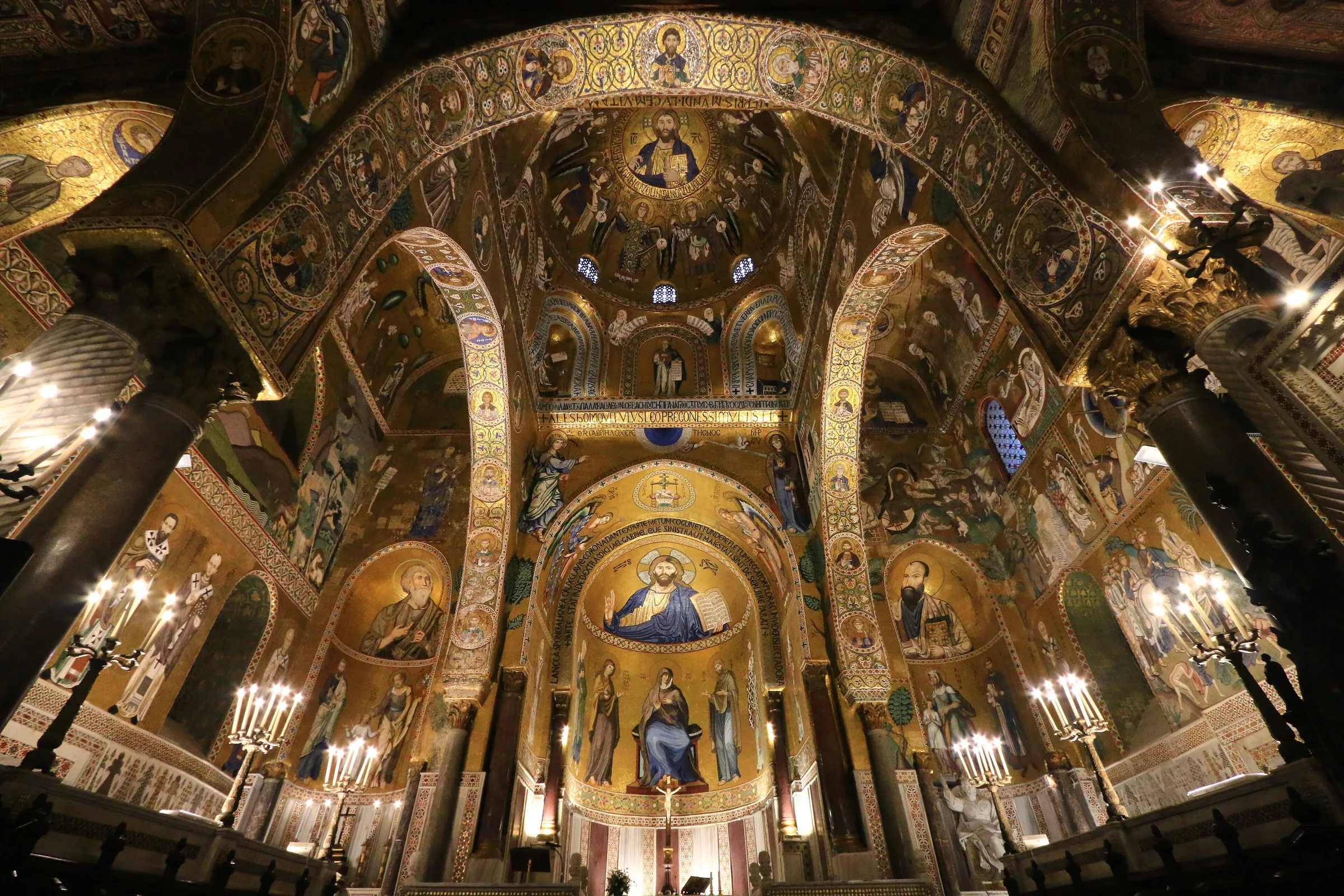
Planen Sie mehr Zeit ein, als das Wort „Kapelle“ vermuten lässt, denn der Palazzo dei Normanni ist eigentlich mehrere Attraktionen, die sich in einem einzigen Besuch bündeln. Die Cappella Palatina selbst belohnt 30 bis 45 Minuten: genug, um den Christus Pantokrator zu erfassen, der von der Kuppel und noch einmal von der Apsis herabblickt, um die Szenen des Alten und Neuen Testaments entlang der goldenen Wände nachzuvollziehen, um zur honigwabenartigen Muqarnas-Decke aufzuschauen und um den Cosmaten-Marmor mit seinen Einlegearbeiten unter den Füßen und entlang der unteren Wände zu studieren. Wer es überstürzt, verpasst die Details – die kleinen erzählerischen Tafeln, das Zusammenspiel byzantinischer, lateinischer und fatimidischer Handwerkskunst. Über die Kapelle hinaus dauert der vollständige Rundgang durch den Palast in der Regel 1,5 bis 2 Stunden. Von Donnerstag bis Montag gehören dazu die Königlichen Gemächer in den oberen Stockwerken, darunter die Sala di Ruggero mit ihren weltlichen Mosaiken von Jagdszenen, Leoparden und Pfauen – ein seltenes Zeugnis höfischer, nicht-religiöser normannischer Dekoration, das einen langsamen Gang verdient. Die Dauerausstellung und der archäologische Bereich innerhalb des Palastes beanspruchen weitere Zeit, und die Königlichen Gärten draußen sind ein angenehmer Ort zum Durchatmen davor oder danach. Wenn Sie an einem Dienstag oder Mittwoch zu Besuch sind, planen Sie einen kürzeren Besuch ein: Die Königlichen Gemächer, die Ausstellung und der archäologische Bereich gehören an diesen Tagen nicht zur Route, sodass die Kapelle und die Königlichen Gärten etwa eine Stunde füllen. Fotografen, Mosaikliebhaber und alle, die mit einem Audioguide unterwegs sind, sollten eher am oberen Ende kalkulieren. Familien mit kleinen Kindern bewegen sich durch die oberen Räume oft schneller, verweilen aber in der Kapelle, die die Aufmerksamkeit gut hält. Als Faustregel gilt: Reservieren Sie einen halben Vormittag, wenn Sie alles ohne Eile sehen möchten, und bedenken Sie, dass der Zeitplan für Sonn- und Feiertage mit seinem letzten Einlass am Mittag ein engeres Fenster lässt, um alles unterzubringen.
Was Sie sehen, Raum für Raum
Ein Besuch entfaltet sich in einer klaren Abfolge, und wer die Anlage kennt, verbringt seine Zeit dort, wo sie zählt. Das unbestrittene Herzstück ist die Cappella Palatina auf dem piano nobile, die von Roger II. in Auftrag gegebene Hofkapelle, begonnen 1132 und geweiht 1140. Tritt man ein, wandert der Blick nach oben: Ein Christus Pantokrator thront in der Kuppel, ein weiterer in der Apsis, umgeben von Engeln, Propheten und Heiligen in goldgrundigem byzantinischem Mosaik, das im gedämpften Licht zu leuchten scheint. Über dem Langhaus schwebt die außergewöhnliche bemalte Holzdecke mit Muqarnas, ein fatimidischer Bienenwaben aus stalaktitenförmigen Gebilden, wie er in einer christlichen Kirche dieses Ranges selten zu sehen ist. Zu Füßen und entlang der Wände ziehen sich Cosmaten-Einlagen — geometrische Marmormuster in kunstvollen Ornamenten —, während eine erhöhte Plattform den Platz markiert, an dem einst der König saß. Nirgends zeigt sich die arabisch-normannisch-byzantinische Synthese deutlicher, und 2015 wurde die Anlage in die UNESCO-Welterbeliste aufgenommen. Von Donnerstag bis Montag setzt sich der Besuch in den Königlichen Gemächern, den Sale Reali, in den oberen Stockwerken fort. Ihr Höhepunkt ist die Sala di Ruggero, Rogers Saal, geschmückt mit weltlichen Mosaiken von Jagdszenen, Hirschen, Leoparden und einander zugewandten Pfauen — eine weltliche Bilderwelt, die das sakrale Programm des Untergeschosses ergänzt. Am Dienstag und Mittwoch sind diese oberen Räume geschlossen, und der Besuch umfasst nur die Kapelle und die Königlichen Gärten. Von Donnerstag bis Montag führt der Rundgang zudem durch eine Dauerausstellung und einen archäologischen Bereich innerhalb des Palastes — der ältesten königlichen Residenz Europas — und öffnet sich zu den Königlichen Gärten, einem schattigen, formalen Raum, der einen natürlichen Abschluss bildet. Lassen Sie die Abfolge wirken: zuerst die Kapelle, solange die Aufmerksamkeit frisch ist, dann die Gemächer und ihre höfischen Mosaike, schließlich die Ruhe der Gärten, um alles sacken zu lassen, bevor Sie wieder hinab in die Stadt gehen.
Fotografieren, Kleidung und Verhaltensregeln
Die Cappella Palatina ist eine geweihte Kapelle und ein aktiver Ort des Gottesdienstes – kein reines Museum – und ein paar kleine Aufmerksamkeiten sorgen dafür, dass der Besuch für alle angenehm bleibt. Fotografieren für den privaten Gebrauch ist grundsätzlich willkommen, aber Blitzlicht ist in der Kapelle nicht gestattet – das Licht schadet den jahrhundertealten Mosaiken und stört andere Besucher – und auch Stativ und Einbeinstativ sind nicht erlaubt, also planen Sie, aus der Hand zu fotografieren. Das Innere ist bewusst dunkel gehalten, was Teil seiner Atmosphäre ist; lehnen Sie sich ruhig an eine Wand oder Bank, statt nach einem Stativ zu greifen, und schalten Sie Ihren Blitz aus, bevor Sie eintreten, damit Sie nicht unvorbereitet erwischt werden. Kleiden Sie sich angemessen, wie in jeder aktiven Kirche: Schultern und Knie bedeckt zu halten ist der sichere Standard, und im Sommer lohnt es sich, einen leichten Schal oder ein Tuch mitzunehmen, falls Sie sonst in Top und Shorts unterwegs sind. Besucher werden gelegentlich am Eingang gebeten, sich zu bedecken – wer von Anfang an passend gekleidet ist, erspart sich die Enttäuschung nach dem Aufstieg. Im Inneren sprechen Sie leise, stellen Sie Ihr Telefon stumm und seien Sie besonders an Sonn- und Feiertagen achtsam, wenn die Kapelle zwischen 09:30 und 11:30 Uhr für die Messe für Besucher geschlossen ist; wenn ein Gottesdienst stattfindet, gehört der Raum zuerst den Gläubigen. Berühren Sie weder Mosaike, Marmor noch Ausstattung, und blockieren Sie beim Komponieren eines Fotos nicht das schmale Kirchenschiff – treten Sie zur Seite, damit andere passieren können. Ein Audioguide ist gegen eine kleine Gebühr erhältlich und eine gute Möglichkeit, der Ikonografie zu folgen, ohne sich vor die Tafeln zu drängen oder laut vorzulesen. Dies sind dieselben einfachen Manieren, die Sie jedem lebendigen heiligen Ort entgegenbringen würden, und sie bewahren der Kapelle jene Stille, die das Stehen unter ihren goldenen Gewölben so unvergesslich macht. Taschen können am Eingang Sicherheitskontrollen unterliegen – reisen Sie also leicht.
Barrierefreiheit
Der Palazzo dei Normanni ist ein neunhundert Jahre altes Gebäude, das aktiv institutionell genutzt wird. Die Barrierefreiheit ist daher eine Mischung aus durchdachten Vorkehrungen und unvermeidbaren historischen Einschränkungen, und es hilft zu wissen, was einen erwartet. Der Eintritt ist für einen Besucher mit Behinderung zusammen mit einer Begleitperson kostenlos, was die praktische Seite der Besuchsplanung erleichtert. Die Cappella Palatina befindet sich auf dem piano nobile, eine Etage über dem Eingangsniveau, und der Palast hat daran gearbeitet, Aufzüge und stufenfreie Wege zu den Hauptbereichen bereitzustellen; die Kapelle selbst ist weitgehend zugänglich, sobald man sich auf dieser Etage befindet. Die darüber liegenden Königlichen Gemächer, geöffnet von Donnerstag bis Montag, erfordern weitere Treppen und führen durch ältere Gebäudeteile, in denen ein ebenerdiger Zugang schwerer zu gewährleisten ist. Wenn die oberen Räume ein Schwerpunkt Ihres Besuchs sind, lohnt es sich, Ihre spezifischen Bedürfnisse vor Ihrer Reise anzusprechen. Die Böden in der Kapelle bestehen aus historischem Marmor und können stellenweise uneben sein, und die Beleuchtung ist bewusst gedämpft, was für Besucher mit eingeschränkter Mobilität oder Sehschwäche bedenkenswert ist. Es gibt Sitzgelegenheiten, an denen Sie innehalten können, und die kompakte Größe der Kapelle bedeutet, dass die Wege im Inneren kurz sind. Der Weg von der Stadt aus ist die größere Herausforderung: Der Palast steht oben an einem sanften, aber anhaltenden Anstieg vom Dom aus, und die umliegenden Straßen sind abschnittsweise gepflastert. Rollstuhlfahrer und alle, die schnell ermüden, sollten daher lieber mit dem Taxi oder Bus direkt zur Piazza Indipendenza anreisen, statt von unten heraufzugehen. Assistenzhunde sind die übliche Ausnahme von jeglichen Tierbeschränkungen. Da die Anforderungen von Besucher zu Besucher so unterschiedlich sind, ist der sicherste Weg, uns bei der Buchung mitzuteilen, was Sie benötigen: Wir können die aktuellen stufenfreien Wege bestätigen, die Tage, an denen die zugänglichen oberen Räume geöffnet sind, und jede vor Ort verfügbare Unterstützung, damit es an der Tür keine Überraschungen gibt.
Anreise
Die Cappella Palatina befindet sich im Palazzo dei Normanni, der den westlichen Rand des historischen Zentrums von Palermo an der Piazza Indipendenza krönt, nahe der Piazza del Parlamento. Der schönste Weg zu Fuß führt von der Kathedrale von Palermo: Folgen Sie dem Corso Vittorio Emanuele bergauf, passieren Sie das monumentale Tor Porta Nuova neben dem Palast, und Sie erreichen den Eingang in etwa 15 bis 20 Minuten. Es ist ein sanfter, aber stetiger Anstieg, angenehm in den kühleren Morgenstunden und lohnend, bevor die Mittagshitze einsetzt. Wenn Sie lieber nicht zu Fuß gehen möchten, bedienen Stadtbusse die Piazza Indipendenza, den großen Platz am Rand des Palastes und einen Knotenpunkt für mehrere Linien, die das Zentrum durchqueren — eine praktische Option, wenn Sie von weiter außerhalb kommen oder Ihre Kräfte für den Besuch selbst sparen möchten. Taxis setzen Sie am selben Platz ab. Vom Flughafen Palermo (PMO) aus sollten Sie etwa 35 bis 45 Minuten einplanen: Die übliche Kombination ist der Flughafenzug oder der Bus-Shuttle in die Stadt, gefolgt von einem kurzen lokalen Bus oder Taxi hinauf zum Palast, wobei ein direktes Taxi schneller ist, wenn Sie Tür-zu-Tür bevorzugen. Vom Autofahren ins historische Zentrum wird abgeraten — die Straßen sind eng, Parkplätze knapp, und ein Großteil des Gebiets ist beschränkt —, daher sind öffentliche Verkehrsmittel oder ein Taxi fast immer die einfachere Wahl. Sobald Sie an der Piazza Indipendenza sind, ist der Eingang klar ausgeschildert, und derselbe Platz bringt Sie in bequeme Reichweite des übrigen arabisch-normannischen Palermo: San Giovanni degli Eremiti mit seinen roten Kuppeln steht gleich nebenan, und die Kathedrale, die Quattro Canti und der Ballaro-Markt sind einen kurzen Fußweg bergab entfernt. Viele Besucher verbinden die Kapelle mit Monreale, dessen goldene Kathedralmosaike etwa zwanzig Minuten von der Stadt entfernt liegen und eine natürliche Ergänzung zu dem darstellen, was sie gerade gesehen haben. Wir bestätigen Ihren datierten Eintritt im Voraus, sodass die Ankunft einfach ein Erscheinen ist.
Häufig gestellte Fragen
Wie sind die Öffnungszeiten der Cappella Palatina?
Von Montag bis Samstag öffnet der Palast gegen 08:30 Uhr, letzter Einlass gegen 16:30 Uhr. Sonn- und Feiertage sind kürzer, letzter Einlass gegen Mittag. An Sonn- und Feiertagen bleibt die Kapelle zudem zwischen 09:30 und 11:30 Uhr für Besucher wegen der Messe geschlossen – kommen Sie also vor oder nach diesem Zeitfenster.
Kann ich die Königlichen Gemächer an jedem Tag besichtigen?
Nein. Die Königlichen Gemächer, einschließlich der Sala di Ruggero mit ihren Mosaiken mit Jagdszenen, sind nur von Donnerstag bis Montag geöffnet. Am Dienstag und Mittwoch sind sie geschlossen, und der Besuch umfasst nur die Kapelle und die Königlichen Gärten. Wenn Ihnen die Räume im Obergeschoss wichtig sind, planen Sie einen Besuch von Donnerstag bis Montag.
Wie viel Zeit sollte ich für einen Besuch einplanen?
Für die Kapelle allein sollten Sie 30 bis 45 Minuten einplanen, um die Mosaiken, die Muqarnas-Decke und die Marmorböden auf sich wirken zu lassen. Für den vollständigen Palastrundgang von Donnerstag bis Montag — die Königlichen Gemächer, die Ausstellung, der archäologische Bereich und die Gärten — veranschlagen Sie 1,5 bis 2 Stunden; am Dienstag und Mittwoch, wenn nur die Kapelle und die Gärten geöffnet sind, etwa eine Stunde.
Gibt es eine Kleiderordnung, und darf ich fotografieren?
Ja zu dezenter Kleidung: Es handelt sich um eine aktive Kapelle, daher sollten Schultern und Knie bedeckt sein – im Sommer ein Tuch mitführen. Private Fotografie ist in der Regel erlaubt, aber Blitz, Stativ und Einbeinstativ sind in der Kapelle zum Schutz der Mosaike nicht gestattet. Halten Sie den Geräuschpegel niedrig, besonders während der Sonntagsmesse zwischen 09:30 und 11:30 Uhr.
Wie gelange ich zur Cappella Palatina?
Sie befindet sich im Palazzo dei Normanni an der Piazza Indipendenza, etwa 15 bis 20 Minuten zu Fuß bergauf vom Dom von Palermo vorbei an der Porta Nuova. Stadtbusse und Taxis fahren direkt zur Piazza Indipendenza, und vom Flughafen Palermo sind es mit Shuttle und öffentlichen Verkehrsmitteln etwa 35 bis 45 Minuten.