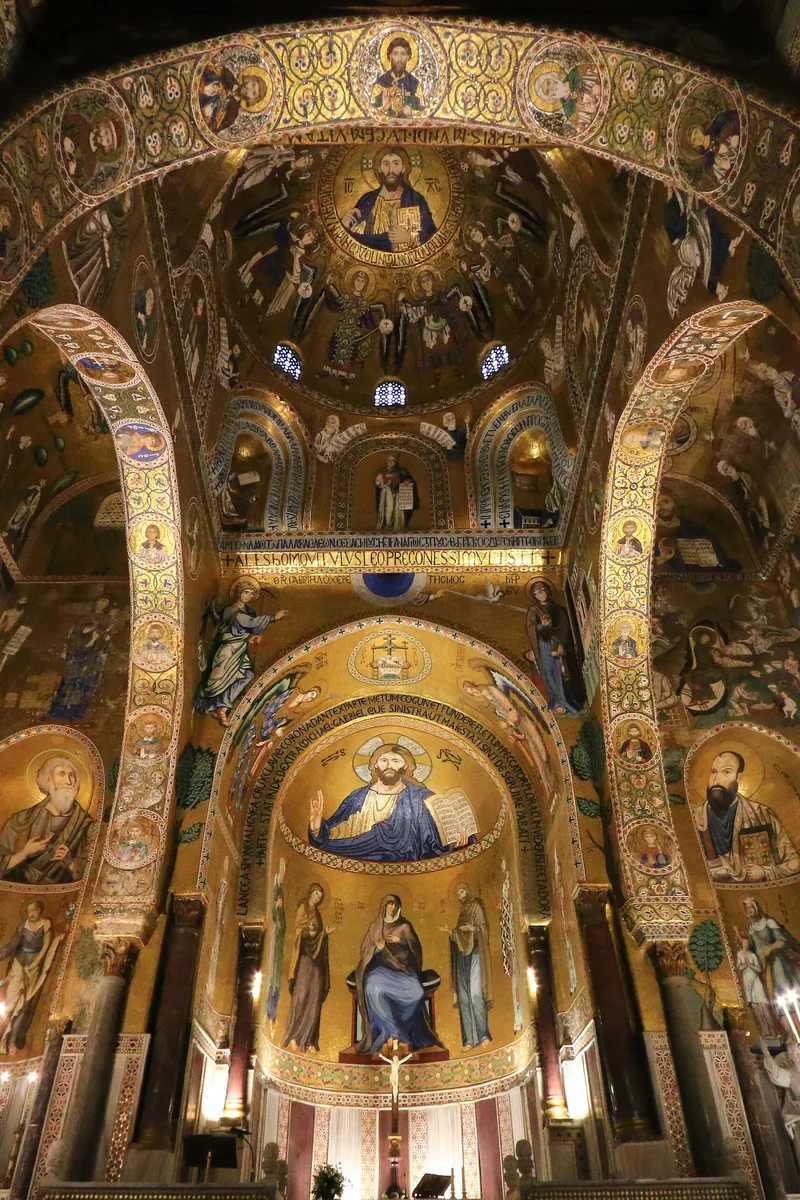
High on the first floor of the Palazzo dei Normanni, the Cappella Palatina is the private chapel the Norman kings of Sicily built for themselves — and nearly nine centuries later it still stops visitors in their tracks. Every surface above head height glows: gold-ground Byzantine mosaics climb the walls and vaults, a Christ Pantocrator gazes down from the dome and again from the apse, and overhead spreads a wooden honeycomb ceiling carved and painted by Muslim craftsmen. It is one of the most complete surviving expressions of the culture that flourished in twelfth-century Sicily, where Greek, Arab and Latin worlds met under one crown.
King Roger II began the chapel in 1132 and it was consecrated in 1140, with the mosaic decoration carried out over the following decades. The result is a single, harmonious space that shouldn't work and yet does: a Latin basilica plan, Byzantine iconography executed by Greek mosaicists, and a muqarnas ceiling drawn straight from the Islamic architecture of North Africa and the Middle East. In 2015 the chapel, together with the wider Arab-Norman monuments of Palermo and the cathedrals of Cefalù and Monreale, was inscribed on the UNESCO World Heritage List.
The chapel sits within the Palazzo dei Normanni — the oldest royal residence in Europe, raised on Punic and Roman foundations, expanded by Arab and then Norman rulers, and today the seat of the Sicilian Regional Assembly. From Thursday to Monday a visit takes in the chapel and the Royal Apartments upstairs, including the Sala di Ruggero with its rare secular mosaics of hunters, peacocks and leopards among the trees. On Tuesday and Wednesday the apartments are closed and the visit is the chapel and the Royal Gardens only.
We are a concierge service: you choose your visit date, we arrange and secure the entry ticket on your behalf, and it arrives in your inbox ready to show at the entrance. No queuing at the box office, no wrestling with an unfamiliar booking site — just your ticket, in English, in your email.