 우선 입장 가능
 아랍-노르만 팔레르모: 예배당 중심의 여정
팔라티나 예배당을 중심으로 1일 또는 2일 일정의 팔레르모 여정을 구성하는 방법, 황금 모자이크와 붉은 돔, 유네스코 루트의 대성당들을 둘러보는 코스.
팔라티나 예배당은 시칠리아의 위대한 문화 루트 중 한복판에 자리한 보석과도 같은 곳입니다. 이곳을 팔레르모의 다른 아랍-노르만 명소들과 하나의 여유로운 일정으로 엮는 방법을 소개합니다.
2015년 유네스코 루트와 그 구성 요소
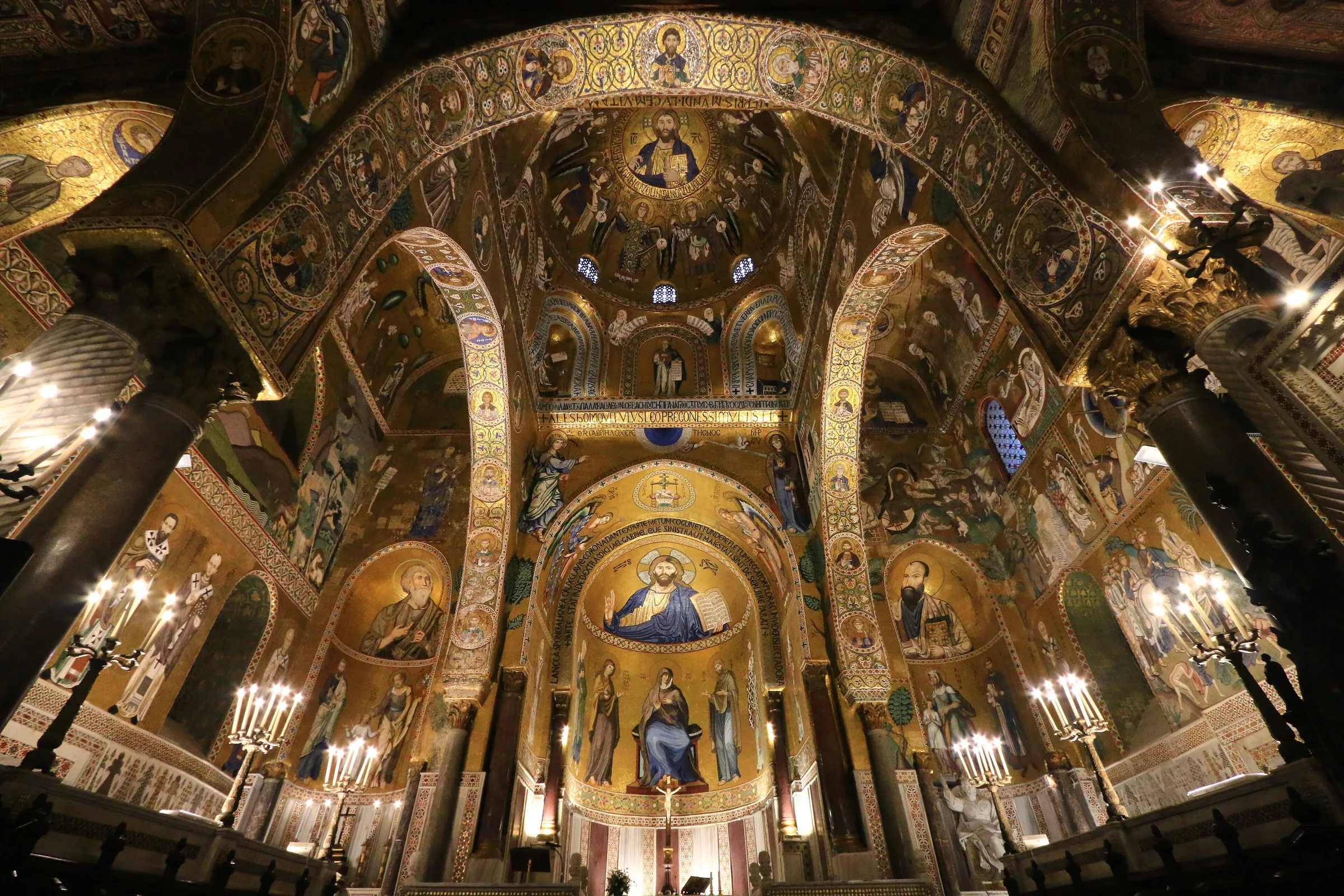
2015년, 유네스코는 팔레르모의 일군의 기념물들을 단일 명칭으로 세계유산목록에 등재했습니다: "아랍-노르만 양식의 팔레르모와 체팔루·몬레알레 대성당"이 그것입니다. 이는 단일 건축물이 아니라, 도시 전역과 인근 두 마을에 흩어진 아홉 개의 건축물로 이루어진 네트워크로, 모두 12세기 시칠리아 노르만 왕국 시대로 거슬러 올라갑니다. 이들을 하나로 묶는 것은 공유된 시각 언어입니다: 비잔틴 모자이크 기법, 이슬람의 공예와 장식, 그리고 서양 로마네스크 건축이 융합되어 그 어디에도 존재하지 않았던 무언가를 탄생시킨 것입니다. 노르만니 궁전의 피아노 노빌레에 자리한 왕실 예배당인 카펠라 팔라티나는 그러한 종합의 최고봉이자 어떤 일정에도 자연스러운 중심축이 됩니다. 루지에로 2세가 의뢰하여 1132년에 착공, 1140년에 봉헌된 이 예배당은 금빛 벽면과 볼트 천장 모자이크, 파티마 양식의 채색 목재 무카르나스 천장, 코스마테스크 기법의 상감 대리석, 그리고 라틴 바실리카 평면을 하나의 지붕 아래에 아우릅니다. 다른 등재 유적들도 같은 이야기를 바깥으로 확장합니다. 팔레르모 시내에는 궁전 자체, 팔레르모 대성당, 산 조반니 델리 에레미티 교회, 산 카탈도 교회, 산타 마리아 델람미라글리오(마르토라나) 교회, 작은 산 조반니 데이 레브로시 교회, 그리고 치사라고 불리는 유희 궁전과 아치형의 암미라글리오 다리가 포함됩니다. 도시 너머에는 그 명칭을 완성하는 두 개의 웅장한 대성당이 있습니다: 콘카 도로 위에 자리한 몬레알레와 동쪽 해안의 체팔루입니다. 이러한 경로를 이렇게 이해하면 일정 계획에 도움이 됩니다. 주제를 파악하기 위해 아홉 곳을 모두 볼 필요는 없지만, 훌륭한 팔레르모 여행은 예배당을 중심으로 삼고 근접성과 하루에 흡수하고 싶은 모자이크의 양에 따라 두세 곳으로 방사형으로 이동하는 방식입니다. 아래 섹션에서는 예배당 방문과 얼마나 쉽게 짝을 이룰 수 있는지에 따라 명소를 그룹화하여, 체크리스트를 쫓기보다 자신의 페이스에 맞는 경로를 구성할 수 있도록 돕습니다.
바로 옆: 산 조반니 델리 에레미티와 궁전 부지
예배당 방문에 가장 쉽게 더할 수 있는 곳은 도보로 몇 분 거리에 있고, 그중 가장 가까운 곳은 San Giovanni degli Eremiti입니다. Palazzo dei Normanni에서 내려다보이는 위치에 솟은 붉은 둥근 지붕 군락은 팔레르모에서 가장 많이 사진에 담기는 실루엣 중 하나이며, 이 도시의 아랍-노르만 성격을 상징합니다. 둥근 지붕은 형태가 분명히 이슬람식이며, 소박한 노르만 교회 위에 놓여 있고, 옆의 조용한 회랑과 정원은 예배당 모자이크의 밀도에 차분한 대조를 이룹니다. 궁전에서 매우 가까워 교통수단 없이 같은 반나절 일정에 자연스럽게 들어갑니다. 궁전 자체를 떠나기 전에, 예배당 티켓이 예배당 외에 무엇을 포함할 수 있는지에 시간을 할애하세요. 목요일부터 월요일까지 통합 입장권은 Palatine Chapel과 함께 왕실 아파트먼트, Royal Gardens, 상설 전시 및 고고학 구역을 포함합니다. 왕실 아파트먼트, 즉 Sale Reali는 그 넓은 방문의 하이라이트입니다. 여기에는 Sala di Ruggero, 즉 Roger's Hall이 있으며, 사냥 장면, 공작, 표범을 담은 세속 모자이크로 장식되어 있어 같은 공방이 종교적 주제가 아니라 세속적 주제로 솜씨를 발휘했음을 보여줍니다. 계획에 반영할 중요한 단서가 있습니다. 왕실 아파트먼트는 목요일부터 월요일까지만 개방됩니다. 화요일과 수요일에는 휴관하며 예배당과 Royal Gardens만 관람할 수 있고, 어느 날을 선택하든 저희 가격은 동일합니다. Sala di Ruggero를 보는 것이 중요하다면 목요일~월요일 기간 쪽으로 방문을 맞추세요. Palazzo dei Normanni는 그 자체로 유럽에서 가장 오래된 왕실 거처이며 여전히 시칠리아 자치의회의 청사로 사용되므로, 복합 시설의 일부는 박물관이 아니라 현역 정부 공간입니다. 예배당, 아파트먼트, 정원, San Giovanni degli Eremiti를 결합하면 하나의 티켓 입장을 중심으로 한, 전부 도보로 가능한 알찬 오전이 완성됩니다.
언덕을 따라 잠시 내려가면: 팔레르모 대성당과 구시가지
궁전을 나서면 다음 행선지는 자연스럽게 옛 도시의 중심부로 이어지는 내리막길입니다. 팔레르모 대성당은 궁전 옆 포르타 누오바 문을 지나 뻗은 직선의 의례용 대로인 코르소 비토리오 에마누엘레를 따라 도보로 약 15~20분 거리에 있습니다. 이 대성당은 동일한 UNESCO 등재 유산의 일부로, 짧은 산책의 보상을 충분히 제공합니다. 길게 뻗은 외관은 도시의 통치자들이 남긴 층층의 기록으로, 노르만 양식의 골격 위에 후대의 고딕, 카탈루냐, 바로크 양식이 더해지고 건립 수세기 후에 추가된 돔이 얹혀 있습니다. 남쪽 현관 근처에서 코란 구절이 새겨진 재사용된 기둥을 찾아보세요. 이슬람 팔레르모의 문자 그대로의 단편이 기독교 대성당에 건축된 것으로, 이 경로가 존재하는 이유를 깔끔하게 보여주는 예시입니다. 내부는 예배당과는 사뭇 다른 분위기입니다. 더 차갑고, 더 소박하며, 보석 같기보다는 기념비적입니다. 시칠리아 중세 통치자들의 왕실 및 제국 무덤이 반암으로 모셔져 있습니다. 같은 길을 계속 내려가면 팔레르모의 네 역사적 구역이 만나는 팔각형 바로크 교차로인 콰트로 칸티에 도착하고, 몇 걸음 더 가면 분수가 가득한 프라토리아 광장이 나옵니다. 이곳은 또한 인근 벨리니 광장에 자리한 마르토라나와 산 카탈도로 이어지는 관문이기도 합니다. 두 교회 모두 등재 유산이며, 마르토라나에는 시칠리아에서 가장 오래된 비잔틴 모자이크 중 일부가 보존되어 있고, 산 카탈도는 산 조반니 델리 에레미티와 같은 붉은 돔을 지니고 있습니다. 이들을 하나로 엮으면 대성당 구간이 단순한 한 곳의 방문지가 아니라, 중세 도시를 기념비 하나하나 천천히 내려가는 여정처럼 느껴집니다. 모든 것이 컴팩트한 도보 반경 안에 있습니다. 코르소가 궁전과 대성당을 이토록 직접적으로 연결하기 때문에, 이 조합은 대부분의 1일 일정의 중추를 이룹니다. 시간에 맞춰 어느 방향으로든 진행하세요. 예배당을 먼저 보고 내리막길로 대성당과 콰트로 칸티에서 점심을 먹거나, 반대로 한적한 늦은 오전 시간에 궁전에 도착하고 싶다면 그 반대 순서로도 좋습니다. 어느 쪽이든 걷기는 쉽고 거의 전 구간이 기억에 남는 한 줄의 거리를 따릅니다.
나들이 가치가 충분한 곳: 몬레알레와 체팔루
유네스코 타이틀의 정식 명칭에 담긴 두 곳의 명소는 팔레르모 외곽에 자리해 있습니다. 예배당의 모자이크에 매료된 이라면 누구든 두 곳 모두 가볼 만한 가치가 있으며, 그중 몬레알레 대성당이 더 가깝습니다. 도시 위쪽 경사면에 자리 잡은 이곳은 약 20분 거리로, 시내버스나 택시로 쉽게 닿을 수 있습니다. 팔라티나 예배당이 아랍-노르만 모자이크 예술의 완벽한 축소판이라면, 몬레알레는 그 비전을 압도적 스케일로 펼쳐 보입니다. 수백 평방미터에 달하는 금빛 바탕 모자이크가 본당과 후진을 감싸고, 그 정점에는 성소 전체 너비만큼 두 팔을 벌린 거대한 그리스도 판토크라토르가 자리합니다. 성서의 이야기 전체가 빛나는 패널 속에 펼쳐지고, 인접한 회랑은 수백 쌍의 기둥마다 저마다 다르게 조각된 주두로 장식되어 그 자체로 걸작입니다. 많은 여행자가 몬레알레를 전체 여정의 감동적 정점으로 꼽으며, 서두르는 부속 코스보다는 반나절을 온전히 할애하는 것이 가장 좋습니다. 체팔루는 티레니아 해안을 따라 동쪽으로 약 1시간 거리에 있으며 기차로 쉽게 갈 수 있어, 같은 날 예배당과 묶기보다는 자연스럽게 하루 종일 여행하기에 적합합니다. 이 도시의 대성당은 아담한 중세 마을과 수영하기 좋은 해변 위로 우뚝 솟은 드라마틱한 바위 곶을 배경으로 서 있으며, 후진에는 또 하나의 장엄한 판토크라토르 모자이크가 자리합니다. 이는 노르만 왕실의 위촉 작품 중 가장 뛰어나고 평온한 것으로 널리 알려져 있습니다. 예배당, 몬레알레, 체팔루의 세 위대한 판토크라토르를 차례로 감상하는 것은 시칠리아를 여행하며 따라갈 수 있는 가장 값진 실마리 중 하나이며, 각 버전은 미묘하게 다른 분위기를 자아냅니다. 시간이 빠듯하다면 이동 거리가 가장 짧으면서도 가장 웅장한 모자이크를 선사하는 몬레알레를 우선하세요. 하루가 더 남았고 예술과 해변 마을을 함께 즐기고 싶다면 체류 기간의 시작이나 끝에 체팔루를 더하세요. 예배당, 몬레알레, 체팔루를 하루에 모두 둘러보는 것도 불가능한 일은 아니지만 무리가 따릅니다. 아래의 2일 일정은 각 명소가 충분한 주목을 받을 수 있도록 여유 있게 배분했습니다.
모자이크 너머: 치사, 테아트로 마시모, 그리고 시장들
팔레르모는 노르만 교회만이 아닙니다. 좋은 일정은 그 이전과 이후의 시대적 층위를 담아낼 여지를 남겨 둡니다. 유네스코 목록에 등재된 또 다른 유적인 치사(Zisa)는 노르만 왕들을 위해 지어진 12세기 여름 궁전으로, 이슬람 양식을 그대로 드러냅니다. 시원한 중앙 홀, 분수 수로, 그리고 열기를 식히기 위해 공기와 물을 순환시키도록 설계된 무카르나스 볼트 천장이 특징입니다. 도심에서 서쪽으로 조금 떨어진 곳에 위치해 있으며, 동일한 아랍-노르만 건축술이 종교가 아닌 세속적 향락에 적용된 모습을 보고자 하는 이들에게 알찬 짧은 들름길이 되어 줍니다. 완전히 다른 분위기를 원한다면, 비아 마케다(Via Maqueda) 상단에 자리한 거대한 신고전주의 오페라 하우스인 테아트로 마시모(Teatro Massimo)는 유럽에서 가장 큰 극장 중 하나로, 객석과 대계단을 둘러보는 가이드 투어를 제공합니다. 외부 계단도 잠시 쉬어 가기 좋은 장소입니다. 그러나 이 도시의 진짜 생동감은 거리 시장에 있습니다. 가장 오래되고 분위기 있는 발라로(Ballaro) 시장은 궁전 바로 아래 알베르게리아(Albergheria) 지구에 펼쳐져 있어 예배당 관람 일정에 자연스럽게 끼워 넣기 좋습니다. 천막 아래 늘어선 생선, 감귤류, 올리브, 길거리 그릴 음식 노점들 — 시끄럽고 투박하며 철저히 시칠리아적입니다. 기념물 사이에서 저렴하고 푸짐하게 식사하기에 도시 최고의 장소 중 하나입니다. 무거운 분위기를 원한다면, 도심 서쪽 끝에 있는 카푸친 카타콤베(Capuchin Catacombs)에는 수천 구의 보존 처리된 시신이 긴 복도를 따라 옷을 입은 채 안치되어 있습니다. 이는 매우 이례적이고 불편한 광경으로, 어떤 방문객에게는 매혹적이지만 다른 이들에게는 차라리 건너뛰는 것이 좋습니다. 일행에게 적합한지 신중히 판단한 후 추가하시기 바랍니다. 이 정거장들을 엮으면 기념물 투어가 살아 있는 도시의 초상화로 바뀌며, 금빛 실내 공간만 이어질 뻔한 일정에 유용한 균형을 더해 줍니다. 모든 곳을 다 보려 하지 말고 취향에 따라 한두 곳을 선택하세요. 핵심은 완전함이 아니라 대비입니다.
예배당 중심의 1일 일정
팔레르모에서 하루만 있다면, 예배당의 빛이 가장 좋고 인파가 가장 적은 오전의 Cappella Palatina를 중심으로 하루를 짜세요. 입장은 고정된 시각이 아니라 선택하신 날짜에 연결되므로, 개방 직후인 하루의 시작 무렵 도착해 모자이크를 서두르지 않고 충분히 본 뒤 이동하세요. 두 가지 계획 포인트가 오전을 좌우합니다. 첫째, 목요일부터 월요일 사이에 방문한다면 같은 티켓으로 예배당에서 곧바로 왕실 아파트먼트와 Sala di Ruggero로 이어질 수 있습니다. 화요일과 수요일에는 그 방들이 휴관하며 예배당과 Royal Gardens만 관람할 수 있습니다. 둘째, 유일하게 시간이 되는 날이 일요일이나 종교 공휴일이라면, 예배당이 늦은 오전에 미사로 방문객에게 폐쇄되고 운영 시간이 더 짧아 마지막 입장이 늦은 오후가 아니라 정오 무렵이라는 점을 기억하세요. 일요일에는 일찍 도착하고 아침을 오래 끌지 마세요. 궁전을 나온 뒤 바로 아래 San Giovanni degli Eremiti와 붉은 둥근 지붕으로 내려가고, 이어서 Corso Vittorio Emanuele을 따라 Palermo Cathedral까지 걸어가세요. Porta Nuova를 지나 도보로 약 15~20분입니다. Ballaro 시장이나 Quattro Canti 근처에서 점심을 먹고, 오후에는 Piazza Bellini의 교회들, Martorana와 San Cataldo에서 시간을 보낸 뒤, 날이 선선해질 무렵 Teatro Massimo에서 마무리하세요. 이 경로는 거의 모든 도보를 구시가지 안에 두며 교통수단이 필요 없어 하루로도 편안합니다. 할인, 청소년 또는 시니어 티켓으로 여행한다면 입장 시 나이 또는 자격 증빙을 확인하므로 신분증을 지참하세요. 도시의 한 지점을 웅장함과 맞바꾸고 싶다면 오후 교회들을 건너뛰고 짧게 Monreale로 올라갔다가 저녁에 중심가로 돌아오세요.
2일 일정과 그 융합이 중요한 이유
이틀 일정으로 여행의 호흡을 더 여유롭게 가져가 보세요. 첫째 날은 위에서 소개한 대로 역사 지구 중심부를 도보로 누비는 일정입니다. 오전에는 Cappella Palatina와 왕궁을 둘러보고, 바로 옆 San Giovanni degli Eremiti를 방문한 뒤 Palermo Cathedral 방향으로 걸어 내려가 Quattro Canti, Piazza Bellini의 성당들, Ballaro 시장까지 이어집니다. 시간이 남으면 Teatro Massimo나 Zisa를 채워 넣어도 좋습니다. 이날은 의도적으로 도보 중심으로 설계되어, 중세 도시가 어떻게 하나로 맞물려 있는지 몸으로 느끼며 하루를 마무리하게 됩니다. 둘째 날은 이동이 필요한 명소들에 할애하세요. 오전에 Monreale로 올라가면 광활한 황금빛 신랑(nave)이 가장 고요한 때입니다. 서두르지 말고 대성당과 회랑(cloister) 모두에서 충분한 시간을 보내세요. 체력과 교통편에 따라 팔레르모로 돌아와 Capuchin Catacombs와 여유로운 오후를 보내거나, 사전에 예약했고 해안을 원한다면 동쪽으로 기차를 타고 Cefalu로 향해 Pantocrator 모자이크, 구시가지, 해변을 즐기며 그 자체로 온전한 하루 여행으로 삼으세요. 예배당의 모자이크를 먼저 보면 Monreale과 Cefalu를 제대로 읽어낼 어휘가 생깁니다. 세 번째 Pantocrator를 볼 즈음에는 각 작업장이 동일한 의뢰를 어떻게 다르게 변주했는지 눈에 들어옵니다. 이 여정이 특별한 이유는 그것이 추적하는 융합 때문입니다. 몇 세대에 걸쳐 노르만 왕들은 그리스어, 라틴어, 아랍어가 모두 사용되던 시칠리아를 통치했고, 비잔틴 모자이크 장인, 이슬람 공예가, 서방 석공들을 나란히 일하게 했습니다. 그 결과물은 Cappella Palatina의 황금빛 벽, muqarnas 천장, 상감 대리석에 응축되어 있는데, 지중해의 세 위대한 전통이 경쟁하는 대신 하나의 일관된 양식을 탄생시킨 보기 드문 순간입니다. 예배당에서 시작해 대성당들로 향하는 이 경로를 따라가는 것은 곧 그 아이디어를 풍경 속에서 좇는 일입니다. 그래서 예배당이 이토록 만족스러운 중심이 되는 것입니다. 아랍-노르만 양식의 팔레르모에 있는 모든 것은 그곳에서 처음 본 것의 메아리이자 확장이니까요.
자주 묻는 질문
2015년 유네스코 아랍-노르만 팔레르모 등재에는 무엇이 포함되나요?
아홉 개의 12세기 기념물을 아우르는 이곳은 비잔틴, 이슬람, 노르만 양식이 어우러진 독특한 건축미를 자랑합니다. 팔라초 데이 노르만니와 팔라티나 예배당, 팔레르모 대성당, 산 조반니 델리 에레미티, 산 카탈도, 마르토라나, 산 조반니 데이 레브로시, 지사와 암미라글리오 다리, 그리고 몬레알레 대성당과 체팔루 대성당이 그 주인공입니다.
카펠라 팔라티나와 몬레알레를 같은 날에 방문할 수 있나요?
네, 가능하지만 하루가 꽉 찹니다. 오전에는 예배당과 궁전을 둘러보신 후, 오후에는 도시에서 약 20분 거리에 있는 Monreale로 이동하세요. 같은 날 해안의 Cefalu까지 추가하는 것은 매우 빠듯하므로, 별도의 당일치기 여행으로 남겨 두시는 것이 좋습니다.
카펠라 팔라티나에서 가장 가까운 아랍-노르만 양식 명소는 어디일까요?
산 조반니 델리 에레미티(San Giovanni degli Eremiti)는 붉은 돔이 인상적인 건축물로, 왕궁에서 내려오면 바로 보이며 도보로 몇 분 거리에 있습니다. 팔레르모 대성당(Palermo Cathedral)은 코르소 비토리오 에마누엘레(Corso Vittorio Emanuele)를 따라 걸으면 15~20분이면 도착하고, 발라로 시장(Ballaro market)은 왕궁 바로 아래에 있어 하루 일정을 알차게 소화하기에 교통수단이 전혀 필요 없습니다.
팔레르모에서 당일치기 여행으로 몬레알레와 체팔루 중 어느 곳이 더 나을까요?
몬레알레는 더 가까워 약 20분 거리에 있으며, 가장 규모가 큰 황금 모자이크를 자랑하므로 시간이 부족하다면 최우선으로 둘 만한 곳입니다. 체팔루는 기차로 동쪽으로 약 1시간 거리에 있으며, 판토크라토르 모자이크와 중세 마을, 해변이 어우러져 짧은 연계 관광이 아닌 하루 종일의 당일 여행으로 적합합니다.
예배당 방문 일정을 개관일에 맞춰 계획해야 하나요?
네. 입장은 선택하신 날짜에 유효합니다. 왕실 아파트먼트는 목요일부터 월요일까지만 개방되므로 Sala di Ruggero를 보려면 그때 방문하세요. 일요일과 종교 공휴일에는 예배당이 늦은 오전에 미사로 폐쇄되고 운영 시간이 더 짧으니 일찍 도착하세요.