 Acceso sin colas disponible
 Palermo árabe-normando: un itinerario en torno a la Capilla
Cómo diseñar un itinerario de uno o dos días por Palermo en torno a la Cappella Palatina, recorriendo los mosaicos dorados, las cúpulas rojas y las catedrales de la ruta UNESCO.
La Cappella Palatina es la joya en el corazón de una de las grandes rutas culturales de Sicilia. Aquí te contamos cómo combinarla con los demás monumentos árabe-normandos de Palermo en un único viaje, con un ritmo bien medido.
La ruta UNESCO de 2015 y qué incluye
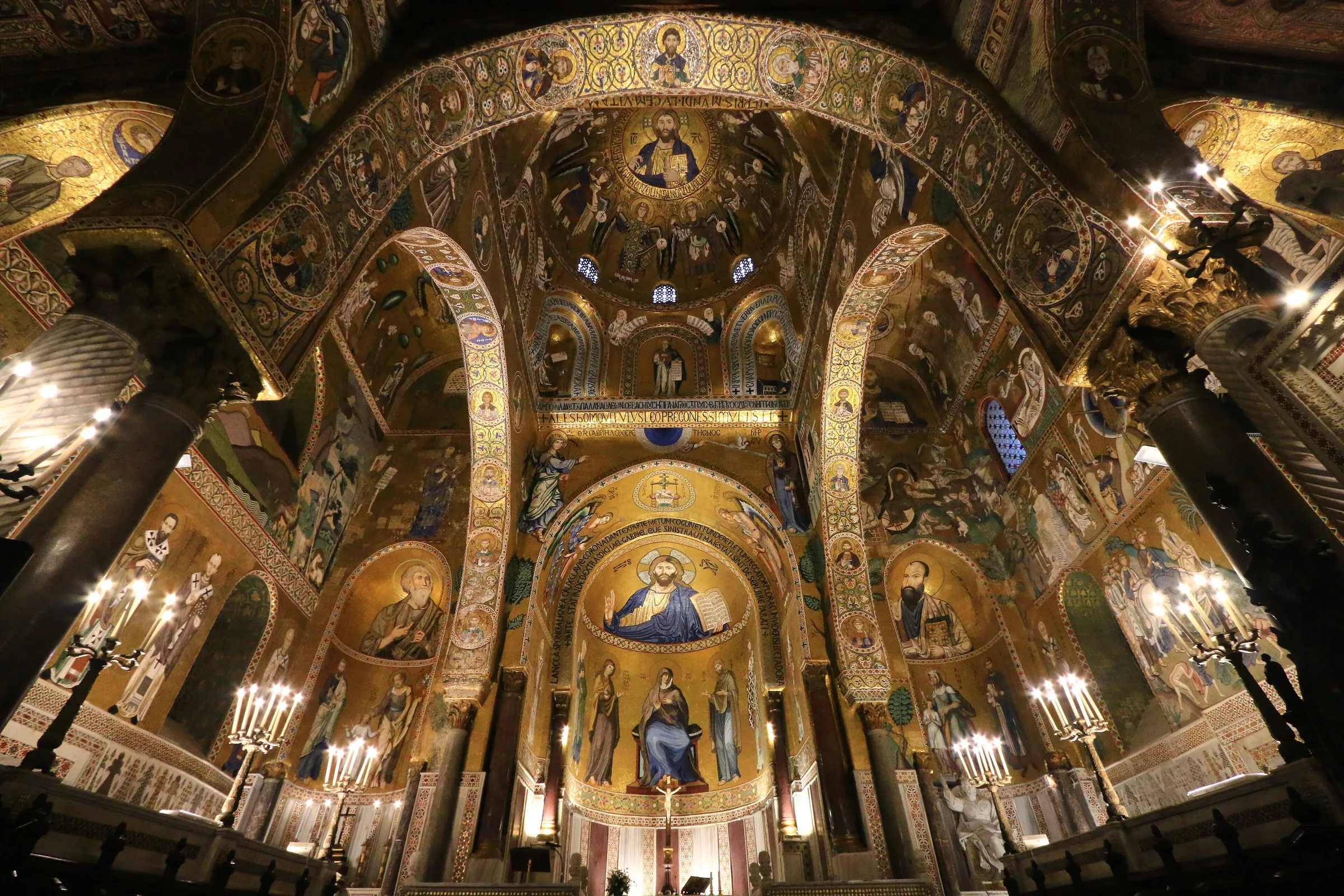
En 2015, la UNESCO añadió un conjunto de monumentos de Palermo a la Lista del Patrimonio Mundial bajo un único título: "Palermo árabe-normando y las catedrales de Cefalú y Monreale". No se trata de un solo edificio, sino de una red de nueve, repartidos entre la ciudad y dos localidades cercanas, todos ellos datados en el reino normando de Sicilia del siglo XII. Lo que los une es un lenguaje visual compartido: la técnica del mosaico bizantino, la artesanía y ornamentación islámicas, y la arquitectura románica occidental, fundidas en algo que no existía en ningún otro lugar. La Cappella Palatina, la capilla real en la planta noble del Palazzo dei Normanni, es la máxima expresión de esa síntesis y el ancla natural de cualquier itinerario. Encargada por el rey Roger II, iniciada en 1132 y consagrada en 1140, reúne bajo un mismo techo mosaicos dorados en muros y bóvedas, un techo de mocárabes de madera pintada de estilo fatimí, mármol incrustado cosmatesco y una planta de basílica latina. Los demás sitios inscritos extienden esa misma historia hacia afuera. Dentro de Palermo incluyen el propio palacio, la catedral de Palermo, las iglesias de San Giovanni degli Eremiti, San Cataldo, Santa Maria dell'Ammiraglio (la Martorana), la pequeña iglesia de San Giovanni dei Lebbrosi y el palacio de recreo conocido como la Zisa, junto con el puente arqueado del Almirante. Fuera de la ciudad se alzan las dos grandes catedrales que completan el título: Monreale, sobre la Conca d'Oro, y Cefalú, en la costa hacia el este. Entender la ruta de este modo te ayuda a planificar. No necesitas ver las nueve para captar el tema, pero una buena visita a Palermo trata la capilla como centro y se irradia hacia dos o tres de las demás, eligiendo por proximidad y por la cantidad de mosaico que quieras absorber en un día. Las secciones siguientes agrupan los lugares según la facilidad con la que se combinan con una visita a la capilla, para que puedas armar una ruta que se ajuste a tu ritmo en lugar de perseguir una lista de comprobación.
Justo al lado: San Giovanni degli Eremiti y los jardines del palacio
Los añadidos más fáciles a una visita a la capilla son los que puedes alcanzar a pie en minutos, y el más cercano de todos es San Giovanni degli Eremiti. Su conjunto de cúpulas rojas bulbosas, que se alza justo cuesta abajo desde el Palazzo dei Normanni, es una de las siluetas más fotografiadas de Palermo y un símbolo del carácter árabe-normando de la ciudad. Las cúpulas son inconfundiblemente islámicas en su forma, sobre una sobria iglesia normanda, y el tranquilo claustro y jardín junto a ella hacen un contrapunto sereno a la densidad de los mosaicos de la capilla. Como está tan cerca del palacio, encaja de forma natural en la misma media jornada sin ningún transporte. Antes de dejar el propio palacio, dedica tiempo a lo que tu entrada de la capilla pueda incluir más allá de la capilla. De jueves a lunes la entrada combinada cubre la Cappella Palatina junto con los Apartamentos Reales, los Jardines Reales, la exposición permanente y la zona arqueológica. Los Apartamentos Reales, o Sale Reali, son lo más destacado de esa visita más amplia: albergan la Sala di Ruggero, la Sala de Ruggero, decorada con mosaicos profanos de escenas de caza, pavos reales y leopardos que muestran a los mismos talleres aplicando su destreza a temas mundanos en lugar de sagrados. Hay un detalle importante que tener en cuenta. Los Apartamentos Reales abren solo de jueves a lunes; el martes y el miércoles están cerrados y la visita se limita a la capilla y los Jardines Reales únicamente, mientras que nuestro precio es el mismo elijas el día que elijas. Si ver la Sala di Ruggero te importa, inclina tu visita hacia una ventana de jueves a lunes. El Palazzo dei Normanni es en sí la residencia real más antigua de Europa y sigue siendo la sede de la Asamblea Regional Siciliana, por lo que partes del complejo son espacio de gobierno en activo y no museo. Combinar la capilla, los apartamentos, los jardines y San Giovanni degli Eremiti te da una mañana compacta y totalmente transitable a pie, construida en torno a una única entrada con ticket.
Un breve paseo cuesta abajo: la Catedral de Palermo y el casco antiguo
Desde el palacio, el siguiente paso lógico es descender hacia el corazón de la ciudad antigua. La Catedral de Palermo queda a unos quince o veinte minutos a pie por el Corso Vittorio Emanuele, el eje ceremonial rectilíneo que pasa junto a la Puerta Nueva, al lado del palacio. La catedral forma parte de la misma inscripción de la UNESCO y recompensa el breve paseo: su larga fachada es un registro en capas de los gobernantes de la ciudad, combinando la fábrica normanda con añadidos góticos, catalanes y barrocos posteriores, además de una cúpula añadida siglos después de su fundación. Busque la columna reutilizada cerca del pórtico sur, tallada con una inscripción coránica: un fragmento literal del Palermo islámico incrustado en una catedral cristiana, y una ilustración perfecta de por qué existe esta ruta. En el interior, el ambiente es muy distinto al de la capilla: más fresco, más sobrio, monumental antes que enjoyado, con los sepulcros reales e imperiales de los gobernantes medievales de Sicilia reunidos en pórfido. Siguiendo por la misma calle se llega a los Quattro Canti, la encrucijada barroca octogonal donde se encuentran los cuatro barrios históricos de Palermo, y a pocos pasos, la Piazza Pretoria con su abarrotada fuente. Esta es también la puerta de entrada a la Martorana y a San Cataldo, en la cercana Piazza Bellini, otras dos iglesias inscritas; la Martorana conserva algunos de los mosaicos bizantinos más antiguos de Sicilia, y San Cataldo luce las mismas cúpulas rojas que San Giovanni degli Eremiti. Unir estos puntos hace que la visita a la catedral se sienta menos como una parada aislada y más como un descenso pausado por la ciudad medieval, monumento a monumento, todo en un radio compacto a pie. Como el corso conecta el palacio con la catedral de forma tan directa, esta pareja es la columna vertebral de la mayoría de los planes de un día. Hágalo en la dirección que mejor se adapte a sus horarios: la capilla a primera hora, luego cuesta abajo hacia la catedral y los Quattro Canti para almorzar, o a la inversa si prefiere llegar al palacio para una franja más tranquila a media mañana. En cualquier caso, el paseo es fácil y transcurre casi por completo a lo largo de una calle memorable.
Vale la pena la excursión: Monreale y Cefalù
Los dos monumentos que dan nombre completo al título de la UNESCO se encuentran en las afueras de Palermo, y ambos merecen el viaje para quien se rinda ante los mosaicos de la capilla. La catedral de Monreale es la más cercana de las dos, encaramada en la ladera sobre la ciudad, a unos veinte minutos, accesible en autobús local o taxi. Si la Cappella Palatina es la miniatura perfecta del arte musivario árabe-normando, Monreale es la misma visión a escala abrumadora: hectáreas de mosaico sobre fondo dorado revisten la nave y el ábside, culminando en un colosal Cristo Pantocrátor cuyas manos extendidas abarcan la anchura del santuario. Los ciclos narrativos recorren toda la historia bíblica en paneles luminosos, y el claustro contiguo, rodeado por cientos de columnas pareadas con capiteles tallados individualmente, es una obra maestra por derecho propio. Muchos visitantes consideran Monreale el punto culminante emocional de toda la ruta, y lo mejor es dedicarle una mañana o tarde completas, no una visita apresurada de relleno. Cefalú queda más lejos, a una hora hacia el este por la costa tirrena, y se llega fácilmente en tren, lo que la convierte en una excursión natural de día entero más que en una combinación con la capilla el mismo día. Su catedral se alza frente a un espectacular promontorio rocoso, sobre un compacto pueblo medieval y una playa apta para el baño, y su ábside alberga otro imponente mosaico del Pantocrátor, considerado ampliamente uno de los más bellos y serenos de los encargos normandos. Contemplar los tres grandes Pantocrátores en sucesión —el de la capilla, el de Monreale y el de Cefalú— es uno de los hilos más gratificantes que se pueden seguir a través de Sicilia, cada versión sutilmente distinta en su atmósfera. Si el tiempo apremia, prioriza Monreale, que ofrece los mosaicos más grandiosos con el menor desplazamiento. Si dispones de un día extra y quieres combinar arte con un pueblo costero, añade Cefalú al principio o al final de tu estancia. Intentar ver la capilla, Monreale y Cefalú en un solo día es posible pero agotador; el plan de dos días que proponemos a continuación las reparte para que cada una reciba la atención que merece.
Más allá de los mosaicos: la Zisa, el Teatro Massimo y los mercados
Palermo es más que sus iglesias normandas, y un buen itinerario deja espacio para las capas que vinieron antes y después. La Zisa, otro sitio en la lista de la UNESCO, es un palacio de verano del siglo XII construido para los reyes normandos en un idioma francamente islámico, con una sala central fresca, un canal de fuente y bóvedas de mocárabes diseñadas para mover aire y agua a través del calor. Se alza un poco al oeste del centro y constituye un breve desvío gratificante para quien quiera ver la misma artesanía árabe-normanda aplicada al placer secular más que al culto. Para un cambio total de registro, el Teatro Massimo, el vasto teatro de ópera neoclásico cerca de la parte alta de Via Maqueda, es uno de los teatros más grandes de Europa y ofrece visitas guiadas a su auditorio y sus grandes escalinatas; incluso desde fuera, sus escalones son un buen lugar para detenerse. El pulso real de la ciudad, sin embargo, está en sus mercados callejeros. Ballarò, el más antiguo y atmosférico, se extiende por el barrio de Albergheria justo debajo del palacio, por lo que encaja fácilmente en un día de capilla: puestos de pescado, cítricos, aceitunas y comida callejera a la parrilla bajo un dosel de toldos, ruidoso y sin pulir y profundamente siciliano. Es uno de los mejores lugares de la ciudad para comer barato y bien entre monumentos. En el lado sombrío, las Catacumbas de los Capuchinos, en el borde occidental del centro, albergan miles de cuerpos preservados y vestidos en largos corredores, una vista genuinamente inusual e inquietante que fascina a algunos visitantes y que otros prefieren evitar; decida con cuidado si conviene a su grupo antes de añadirla. Entretejidas, estas paradas convierten una gira de monumentos en un retrato de la ciudad viva, y dan lastre útil a un itinerario que de otro modo podría convertirse en una sucesión ininterrumpida de interiores dorados. Elija una o dos según su gusto en lugar de intentar encajarlas todas; la idea es el contraste, no la exhaustividad.
Un plan de un día centrado en la capilla
Si dispones de un solo día en Palermo, constrúyelo en torno a una mañana en la Cappella Palatina, cuando la luz de la capilla es mejor y las multitudes son más escasas. El acceso está vinculado a la fecha que elijas y no a una hora fija, así que procura llegar no mucho después de la apertura, al comienzo del día, y concede a los mosaicos un tiempo sin prisas antes de seguir. Dos puntos de planificación condicionan la mañana. Primero, si visitas entre jueves y lunes, puedes continuar directamente desde la capilla a los Apartamentos Reales y la Sala di Ruggero con la misma entrada; el martes y el miércoles esas salas están cerradas y la visita se limita a la capilla y los Jardines Reales únicamente. Segundo, si tu único día libre es un domingo o un festivo religioso, ten en cuenta que la capilla cierra a los visitantes para la misa a media mañana y mantiene un horario más corto, con última entrada alrededor del mediodía en lugar de a media tarde; un domingo deberías llegar temprano y no alargar el desayuno. Después del palacio, baja caminando hasta San Giovanni degli Eremiti y sus cúpulas rojas justo debajo, y luego continúa por el Corso Vittorio Emanuele hasta la Catedral de Palermo, unos quince o veinte minutos a pie pasando por la Porta Nuova. Haz una pausa para comer en el mercado de Ballaro o alrededor de los Quattro Canti, y luego dedica la tarde a las iglesias de la Piazza Bellini, la Martorana y San Cataldo, antes de terminar en el Teatro Massimo cuando refresque el día. Esta ruta mantiene casi todo el caminar dentro del casco antiguo y no necesita transporte, que es lo que la hace cómoda en un día. Lleva identificación si viajas con una entrada reducida, juvenil o para mayores, ya que se comprueba en la entrada la prueba de edad o condición. Si prefieres cambiar una parada urbana por grandeza, prescinde de las iglesias de la tarde y haz la breve excursión hasta Monreale, regresando al centro para la noche.
Un plan de dos días y por qué esta fusión importa
Dos días permiten que el itinerario respire. Dedica el primer día al centro histórico tal y como se describe arriba: la Cappella Palatina y el palacio por la mañana, San Giovanni degli Eremiti justo al lado, y después el paseo hasta la Catedral de Palermo, los Quattro Canti, las iglesias de la Piazza Bellini y el mercado de Ballarò, con el Teatro Massimo o la Zisa para completar cualquier hueco. Este día está pensado para hacerse a pie, de modo que lo termines con una sensación clara de cómo encaja la ciudad medieval. Reserva el segundo día para los lugares que requieren desplazamiento. Sube a Monreale por la mañana, cuando su inmensa nave dorada está más tranquila, y dedica tiempo de verdad tanto a la catedral como al claustro, sin prisas por volver. Según tu energía y el transporte, o regresas a Palermo para las Catacumbas de los Capuchinos y una tarde más pausada, o, si has reservado con antelación y te apetece la costa, toma el tren hacia el este hasta Cefalù por su Pantocrátor, su casco antiguo y su playa, tratándolo como una excursión de día completo por derecho propio. Ver primero los mosaicos de la capilla te da el vocabulario para leer Monreale y Cefalù con criterio; para el tercer Pantocrátor ya notas cómo cada taller varió el mismo encargo. Lo que hace especial este itinerario es la fusión que rastrea. Durante unas generaciones, los reyes normandos gobernaron una Sicilia donde se hablaba griego, latín y árabe, y contrataron a mosaicistas bizantinos, artesanos islámicos y canteros occidentales para trabajar codo con codo. El resultado, destilado en los muros dorados de la Cappella Palatina, su techo de mocárabes y su mármol incrustado, es un momento raro en que tres grandes tradiciones mediterráneas produjeron un estilo único y coherente en lugar de competir entre sí. Seguir la ruta desde la capilla hacia fuera, hasta las catedrales, es realmente seguir esa idea a través del paisaje, y por eso la capilla funciona como un centro tan satisfactorio: todo lo demás en la Palermo árabe-normanda se convierte en un eco o una amplificación de lo que viste allí primero.
Preguntas frecuentes
¿Qué incluye la inscripción UNESCO de 2015 del Palermo árabe-normando?
Abarca doce monumentos del siglo XII que comparten un estilo bizantino, islámico y normando: el Palazzo dei Normanni con la Cappella Palatina, la catedral de Palermo, San Giovanni degli Eremiti, San Cataldo, la Martorana, San Giovanni dei Lebbrosi, la Zisa y el puente dell'Ammiraglio, además de las catedrales de Monreale y Cefalú.
¿Puedo visitar la Cappella Palatina y Monreale el mismo día?
Sí, aunque ocupa el día completo. Dedica la mañana a la capilla y al palacio, y luego sube a Monreale, a unos veinte minutos de la ciudad, para la tarde. Añadir también Cefalú, en la costa, en un solo día resulta muy apretado; mejor reservarlo como una excursión aparte.
¿Qué monumentos árabe-normandos están más cerca de la Cappella Palatina?
San Giovanni degli Eremiti, con sus cúpulas rojas, se encuentra justo bajando desde el palacio y se llega a pie en pocos minutos. La catedral de Palermo está a quince o veinte minutos andando por el Corso Vittorio Emanuele, y el mercado de Ballarò queda justo debajo del palacio, así que un día compacto no requiere transporte.
¿Qué excursión desde Palermo merece más la pena, Monreale o Cefalú?
Monreale está más cerca, a unos veinte minutos, y alberga los mosaicos dorados más extensos, así que es la prioridad si el tiempo es limitado. Cefalú queda a una hora en tren hacia el este y combina su mosaico del Pantocrátor con un casco medieval y playa, lo que la convierte en una excursión de día completo más que en una visita rápida.
¿Tengo que planificar la visita a la capilla según los días de apertura?
Sí. La entrada es válida en la fecha que elijas. Los Apartamentos Reales abren solo de jueves a lunes, así que visita entonces para ver la Sala di Ruggero. Los domingos y festivos religiosos la capilla cierra a media mañana para la misa y mantiene un horario más corto, así que llega temprano.